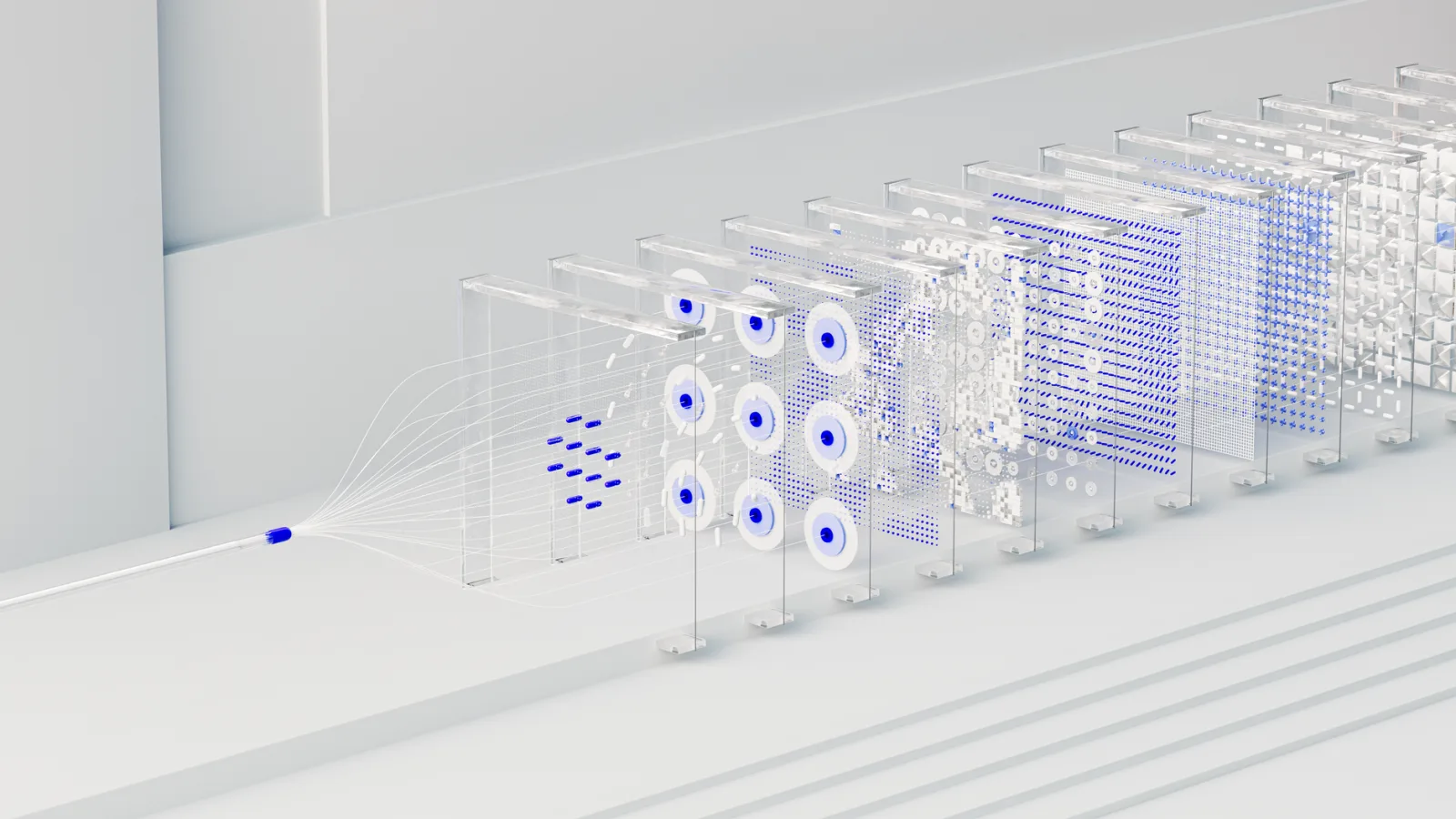
When you read a sentence, you instantly get a sense of what each word means and how they relate. Modern language models do something similar, but they use a structure called a transformer. In this post we’ll walk through the basic building blocks that let a transformer turn a string of characters into a notion of "meaning". Understanding this helps you fine‑tune models, debug odd outputs, and design better prompts.
What a Transformer Is, in Plain Terms
A transformer is a type of neural network introduced for language tasks. It processes text all at once, rather than one word at a time like older models. The key ideas are token embeddings, self‑attention, and positional encoding.
- Token: the smallest unit the model works with, usually a word piece or sub‑word.
- Embedding: a dense vector (a list of numbers) that represents a token in a high‑dimensional space.
- Self‑attention: a mechanism that lets each token look at every other token and decide how much to focus on them.
- Positional encoding: a way to give the model a sense of order, because attention alone doesn’t know which token comes first.
From Words to Vectors: Token Embeddings
When you feed a sentence like "The cat sat on the mat" into a transformer, the first step is to break it into tokens. Each token gets mapped to an embedding vector using a lookup table that was learned during training.
# Example using Hugging Face Transformers
from transformers import AutoTokenizer, AutoModel
model_name = "bert-base-uncased"
tokenizer = AutoTokenizer.from_pretrained(model_name)
model = AutoModel.from_pretrained(model_name)

sentence = "The cat sat on the mat"
inputs = tokenizer(sentence, return_tensors="pt")
embeddings = model.embeddings(inputs['input_ids'])
tokenizersplits the sentence into sub‑word tokens.model.embeddingsretrieves the learned vector for each token.- The resulting
embeddingstensor has shape (number of tokens, embedding dimension).
These vectors live in a space where similar words are close together. For instance, "cat" and "dog" will have vectors that point in similar directions because they appear in similar contexts during training.
The Magic of Self‑Attention
Embedding vectors alone don’t capture relationships between words. That’s where self‑attention steps in. For each token, the model computes three new vectors: query, key, and value. The attention score between two tokens is the dot product of the query of the first token and the key of the second token.
# Simplified pseudo‑code for one attention head
Q = embeddings @ W_Q   # queries
K = embeddings @ W_K   # keys
V = embeddings @ W_V   # values
scores = softmax(Q @ K.T / sqrt(d_k))
context = scores @ V
W_Q,W_K,W_Vare learned weight matrices.softmaxturns raw scores into probabilities that sum to 1.contextis a weighted sum of the value vectors, where the weights come from how much each token "attended" to the others.
The result is a new representation for each token that now contains information from the whole sentence, weighted by relevance. This is why a transformer can understand that "cat" in "The cat sat" is the subject, even though the word appears far from the verb in longer sentences.
Stacking Layers: Building Deeper Meaning
A transformer model stacks multiple attention layers (often called blocks). Each block takes the output of the previous one, applies attention again, and passes it through a small feed‑forward network. With each layer, the token representations become more abstract:
- Lower layers capture local patterns like phrase structure.
- Middle layers start to encode syntactic roles (subject, object).
- Higher layers capture semantic concepts (sentiment, intent).
Researchers have visualized these layers and found that the final hidden state of the special [CLS] token (in models like BERT) often acts as a summary of the whole input. That vector is what downstream tasks (classification, question answering) use as a compact representation of meaning.
Training Objective: Learning Meaning from Data
How does the model learn to assign useful vectors? The original transformer paper introduced two tasks:
- Masked Language Modeling (MLM): randomly hide some tokens and ask the model to predict them. The model must infer the missing word from the surrounding context, forcing it to capture meaning.
- Next Sentence Prediction (NSP) (used in BERT): given two sentences, predict if the second follows the first. This encourages understanding of discourse relationships.
Later models like GPT use causal language modeling, predicting the next token in a sequence. All these objectives rely on large text corpora, so the model sees many examples of how words co‑occur, gradually shaping the embedding space to reflect meaning.
Why This Matters for Developers
Knowing the internals helps in several practical ways:
- Prompt engineering: If you understand that the model focuses on the most relevant tokens, you can craft prompts that place important context near the beginning.
- Fine‑tuning: When you add a new task, you typically add a small classification head on top of the final hidden state. You’re essentially re‑using the meaning the model already learned.
- Debugging: If the model gives a nonsensical answer, you can inspect attention maps to see which tokens it paid attention to and spot mis‑alignments.
Common Misconceptions
- Transformers store meaning like a dictionary. No, they compute meaning on the fly using learned patterns.
- More layers always mean better meaning. After a point, additional layers may over‑fit or add latency without noticeable gains.
- Attention weights are always interpretable. Sometimes they look noisy; they are a tool, not a crystal ball.
Quick Checklist for Working with Meaning in Transformers
- Verify tokenization: make sure your input isn’t split in unexpected ways.
- Look at the [CLS] or pooled output when you need a sentence‑level embedding.
- Use attention visualizers (e.g.,
bertviz) to sanity‑check what the model attends to. - When fine‑tuning, start with a low learning rate to preserve the learned meaning.
FAQ
How does a transformer know the order of words?
It adds positional encodings to each token embedding. These encodings are vectors that vary with position, allowing the attention mechanism to differentiate "cat sat" from "sat cat".
Can I use a transformer for non‑text data?
Yes. The same attention principle works for images (Vision Transformers) and audio, as long as you can represent the data as a sequence of tokens.
Does a larger embedding size always improve meaning?
Not necessarily. Larger vectors can capture more nuances, but they also require more data and compute. Often, a well‑regularized medium‑sized model performs best for a given task.
Wrapping up
Transformers turn words into vectors, let each token look at all others through attention, and stack these operations to build increasingly abstract representations. The training objectives push the model to fill in missing words, which naturally forces it to learn what words mean in context. With this foundation, you can better design prompts, fine‑tune models, and troubleshoot odd outputs. The next time you ask an AI why it said something, you’ll have a clearer picture of the layers of meaning hidden inside its attention heads.